
$ 32.00 USD


SOLD OUT
Disc 1:
1. m'Lover
2. Hey Big Star
3. Say Yeah
4. Can't Let Go, Juno
5. Ode to My Next Life
6. Who'd You Kill
7. Statues in a Gallery
8. Why Don't You Answer Me
9. Flame on Flame (a Slow Dirge)
10. Honeybody
Disc 2:
1. Comin' To You
2. Harpsi Chords
3. m'Lover (Demo-arigato Version)
4. Hey Big Star (Demo-arigato Version)
5. Say Yeah (Demo-arigato Version)
6. Can't Let Go, Juno (Demo-arigato Version)
7. Ode to My Next Life (Demo-arigato Version)
8. Who'd You Kill (Demo-arigato Version)
9. Statues in a Gallery (Demo-arigato Version)
10. Why Don't You Answer Me (Demo-arigato Version)
11. Flame on Flame (a Slow Dirge) (Demo-arigato Version)
12. Honeybody (Demo-arigato Version)
Credits
Sonderlust Credits:
All songs by K Ishibashi (Kizmoda Music Inc/ASCAP). ©&℗ 2016 Joyful Noise Recordings & Kishi Bashi.
Bram Inscore - bass
Matt Chamberlain - drums and percussion
John Kirby - additional keyboards and Wurlitzer on “Who’d You Kill”
Zachary Colwell - ripping flute solo on “Say Yeah”
Keiko Ishibashi - vocal samples on “m”lover”
Nancy Kuo and Irina Chirkova - additional violin and cello
Kevin Barnes - additional bass on “Hey Big Star”
string arrangement on “Who’d You Kill” and all last minute music copying by Todd Matthews
Produced by Chris Taylor and Kishi Bashi
Mixed by Patrick Dillet @ Reservoir Studios NYC
Mastered by Greg Calbi @ Sterling Sound NYC except for “Comin’ To You” and “Harpsi Chords” mastered by Carl Saff
Recorded by Kishi Bashi at Poolhaus Studios, Athens, GA, and Terrible Studios, Los Angeles by Chris Taylor
Drums and bass recorded @ Cyclops Sound by Chris Taylor
Hollywood Strings recorded @ Elbo Studios, Glendale, CA
Harpsichord recorded by Kishi Bashi @ the UGA Organ Studio
All Demo-arigato versions written, recorded and mixed by Kishi Bashi and mastered by Carl Saff
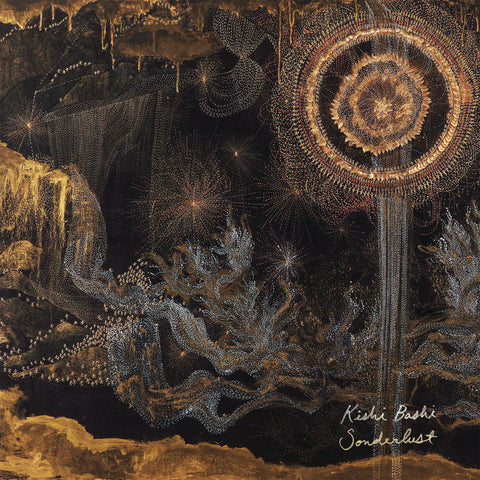
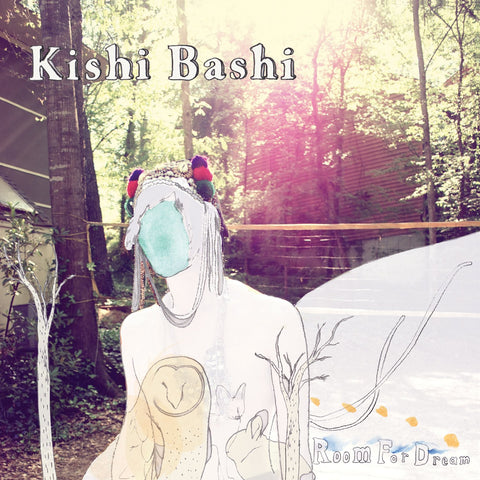
Art by Ssin Kim.
Layout by David J. Woodruff
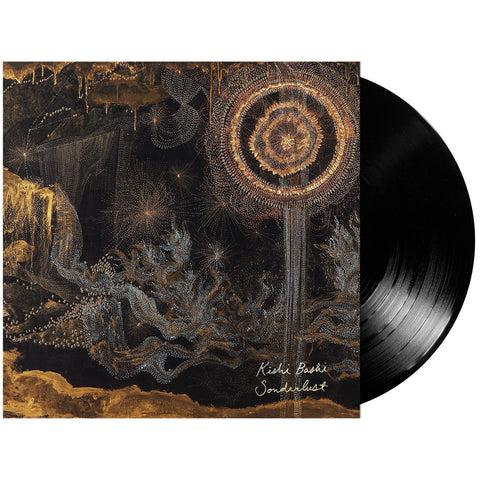
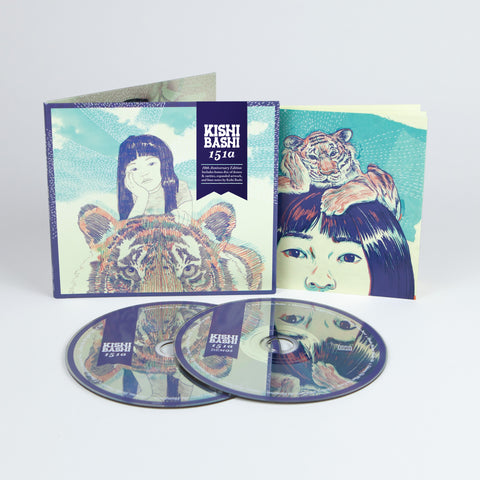
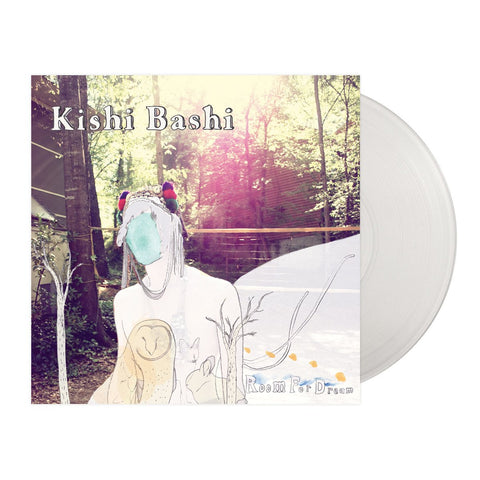
10th Anniversary Edition 2xLP Includes:
- The album proper plus a bonus LP consisting of demos of each song and two new b-sides from the Sonderlust sessions.
- 12-page booklet including expanded liner notes by Kishi Bashi, exclusive studio photos and hand-written notes from the album's compositions.
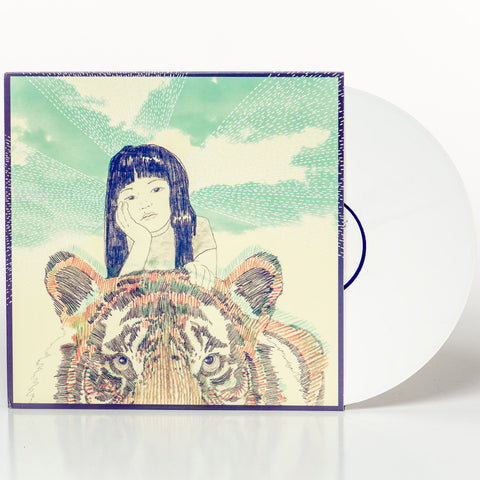
- Packaged in a gatefold jacket featuring new cover art by original artist Ssin Kim.
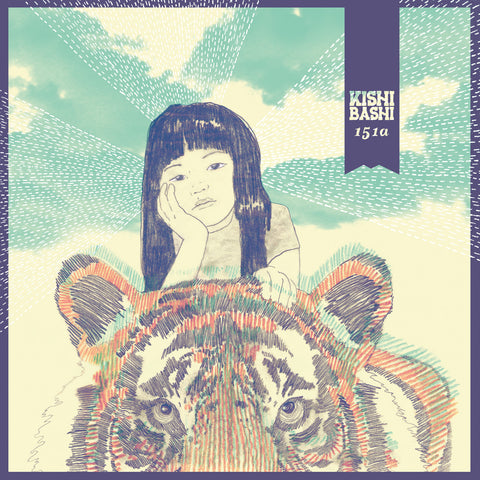
A decade ago, Kaoru Dill-Ishibashi AKA Kishi Bashi found himself emptied out. The success of his previous albums, 151a and Lighght, had turned Ishibashi him into a kind of orchestral ringmaster, his looping violin and buoyant melodies celebrated for their palatial brightness. But by 2015, after years of relentless touring, that brightness threatened to dim. He went to all his usual conduits of creation — violin loops, guitar, piano — and came up with the musical equivalent of fumes. “Touring and its accompanying lifestyle took a heavy toll on my soul and my family,” he recalls.
From that exhaustion came Sonderlust, released in 2016, an album that marked not just a stylistic shift, but a profoundly personal one. Gone were the ornate flourishes and the dizzying maximalism. In their place: analog warmth, vulnerability, and a spiritual candor. It was filled with the kind of startling emotion that Ishibashi never before allowed himself. “It was the beginning of me growing up,” he recalls. “Being comfortable expressing my heartbreak.”
If Lighght sounded like the inside of a kaleidoscope, Sonderlust was the other side of the rainbow: a record made in the twitchy stillness that follows upheaval. Its title, drawn from John Koenig’s Dictionary of Obscure Sorrows, refers to that formidable realization that every person and passerby carries a life as vivid and complicated as your own. Ishibashi took that idea to heart. “It’s about being inspired by your connection to everyone around you,” he says. “Realizing that every single person is at the center of their own universe. It’s a humbling feeling.”
That humility reshaped his music, too. Working with Chris Taylor of Grizzly Bear, Ishibashi set aside the baroque violin loops that had defined his earlier work and began exploring the textural possibilities of vintage synths: specifically, the Juno-106, a MiniMoog, and the Wurlitzer piano. “I wanted to create a more holistic body of work instead of just kitchen-sink energy,” he says. “Nothing says funk like a Wurlitzer.”
The result was an album that shimmered with analog vibrance; soulful, strange, and defenselessly human. ‘Say Yeah’ and ‘Honeybody’ bear traces of Stevie Wonder’s kinetic joy, while “Ode to My Next Life” pulses with Moroder-esque propulsion. Ishibashi enlisted drummer Matt Chamberlain to ground the music with a physical heartbeat. “Chris introduced me to these incredible L.A. musicians who replaced my mediocre Wurlitzer parts with seriously great ones,” he says, laughing. “Everything sounds really good. The drums sound great. It still sounds cool.”
For Ishibashi, that musical clarity mirrored his newly underguarded emotional presentation. “People were reacting to my vulnerability,” he says. “Maybe that’s when I realized it’s my job to be open like that, to help people relate to my music, by relating to them.” He began to see his listeners differently, not as an abstract audience but as a constellation of lives. “I’ve always had a profound respect for them,” he adds. “They take time out of their lives to come see me, to listen. Even if they’re just out there somewhere in the ether, I feel connected to them. It feels like a family.”
Listening now, Sonderlust feels both steeped in its era and timeless: a melancholy yet dancy album refracted through the digital nerviness of the mid-2010s. It remains the fulcrum of Kishi Bashi’s catalogue; the moment when his virtuosic playfulness deepened into something more grounded and humane. “Before, I made music that was fun and exciting to me,” he says. “This was more like catharsis for the struggles of my time.”
The 10th anniversary reissue brings new, revivified life to that transformation, pairing the music with updated artwork from Ssin Kim, the South Korean artist behind the original Sonderlust cover. “The first piece was called End of the Beginning. It was dark, pessimistic; about the end of life,” Ishibashi explains. “The new one, made post-COVID, feels more optimistic. It’s interesting that she’s changed, just like I have. When you’re younger, the world can feel overwhelming. As you age, you start to see your place in it, become more pragmatic, less anxious. I think that’s what this new art captures, a sense of perspective, of hope.”
Ten years later, Ishibashi speaks about the album with gratitude and a slight sense of astonishment. “I’ve been very surprised at how much I’ve changed, what I now value as a musician,” he says. “I used to tour really hard. Now I look back and think, at what cost? But Sonderlust, that feeling of connection, of sonder, that hasn’t changed. It’s still what drives me.”